

- Your cart is empty
- Continue shopping
-
Faith
- Posted on
- Categories:Uncategorized
- 0 comments
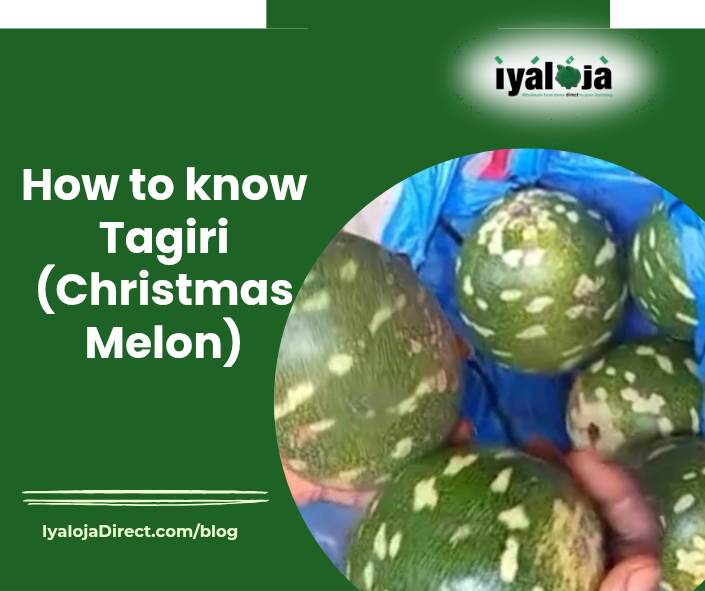

The features of tagiri (Christmas melon) make it easy to recognize and clearly different from common fruits and vegetables found in the market. In many parts of Nigeria, tagiri is seen in rural areas or used in traditional settings, yet many people still do not know how to properly identify it or understand what makes it unique. Some even think it’s egusi or watermelon because they have a striking physical resemblance.
Unlike everyday fruits that are soft, juicy, and eaten fresh, tagiri has distinct physical characteristics. These features are the reason it is not commonly consumed as food but is instead associated with traditional and herbal uses.
Understanding the features of tagiri would help you identify it correctly and appreciate why it holds a special place in local knowledge and traditional practices.
Let’s look at some of the characteristics of Tagiri.
1. Round Or Oval Shape
Tagiri usually grows in a round or slightly oval shape. It looks like a small melon or gourd depending on how mature it is.
This shape makes it easy to recognize in farms or bush areas.
2. Hard Outer Skin
One of the most noticeable features of tagiri is its very hard outer shell. The skin is thick and firm. It protects the inner content of the fruit, and it does not easily break when fresh.
This hard shell is one reason it is not eaten like normal fruits.
3. Green To Yellow Color Change
Tagiri changes color as it matures. Young tagiri is usually green while mature tagiri turns yellowish or pale brown.
This color change shows its level of maturity.
4. Seeds Inside The Fruit
Inside tagiri, you will find many seeds surrounded by soft pulp.
The seeds are usually embedded in a fibrous interior. They are part of what is used in traditional preparations.
The seed content is one of its important natural features.
5. Strong Natural Smell And Taste
Tagiri has a distinct smell and bitter taste, especially when processed or used in traditional forms.
This strong taste and smell is one reason it is not commonly eaten as food.
6. Wild Growth Pattern
Tagiri is not usually cultivated like vegetables in organized farms. It grows in the wild, and can be found in bush areas or rural farms.
It grows naturally without much human care.
This also makes it different from common farm crops.
7. Thick Fibrous Interior
Inside the fruit, tagiri has a fibrous and thick structure. It is not juicy like watermelon. It contains dense plant material.
This structure is part of its traditional usefulness.
Conclusion
Tagiri (Christmas melon) stands out because of its hard shell, wild growth pattern, bitter taste, and seed-filled interior amongst its health benefits. These features make it very different from common fruits and explain why it is mostly used in traditional and herbal practices rather than everyday meals.
Understanding its features helps you easily identify it and also appreciate its unique place in local practices.
Looking for where to buy tagiri in Lagos and other foodstuffs? With Iyaloja Direct weekly bulk foodstuff sharing from Mile12, Oyingbo and Ketu, you get:
- Access to fresh market foodstuff
- Affordable wholesale prices no matter the quantity of items you need
- Reliable sourcing of local ingredients
- Convenient doorstep delivery anywhere in Lagos
Order tagiri now at www.iyalojadirect.com
