
- Your cart is empty
- Continue shopping

-
Faith
- Posted on
- Categories:Uncategorized
- 0 comments
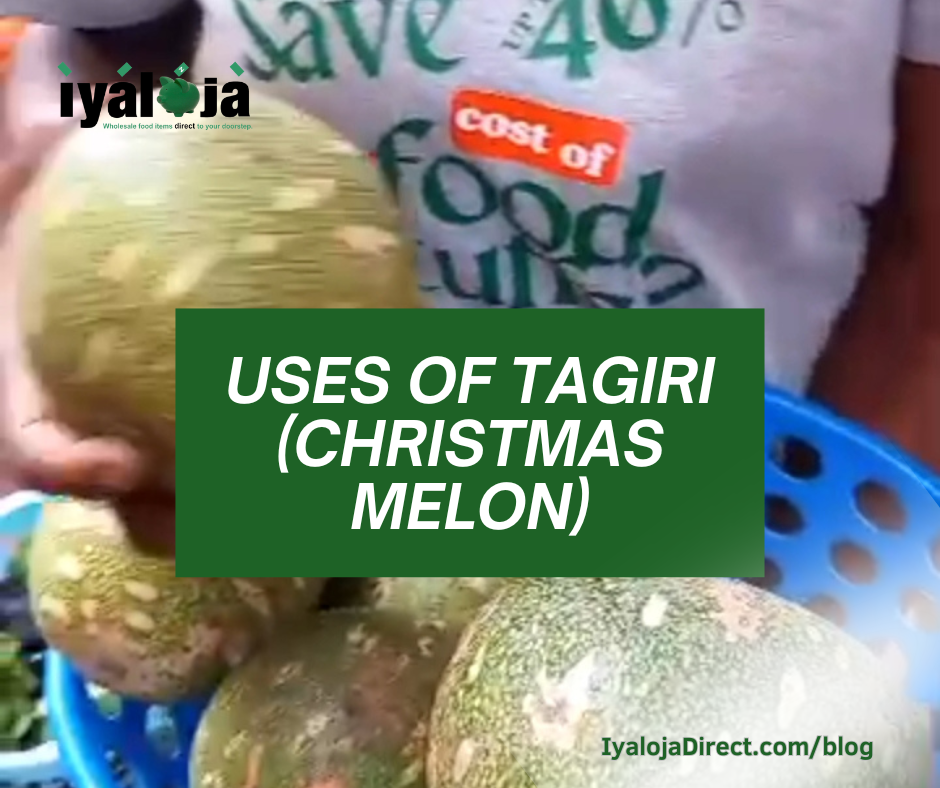

Tagiri, also known as Christmas melon, is a wild plant with distinct features, found in many parts of Nigeria. Unlike common fruits or vegetables that are eaten daily, tagiri is not mainly edible but it’s greatly valued in traditional, herbal, and cultural practices.
The uses of tagiri (Christmas melon) are mostly based on local knowledge passed down through generations. While it is not widely used in modern cooking, it still plays a role in traditional medicine, farming practices, and cultural settings in some communities.
Understanding how tagiri is used helps explain why it is still recognized today, even though it is not a regular household ingredient.
1. Traditional Herbal Medicine Use
One of the most common uses of tagiri is in traditional herbal preparations.
In many communities, it is believed to be useful in supporting general body wellness. Boiled extract made from Tagiri when combined with other natural ingredients is traditionally used to ease cough, catarrh, asthma, and other chest-related issues based on traditional knowledge.
Many households also include Tagiri in herbal remedies to fight fever and malaria symptoms
2. Use In Poultry And Animal Care
In some rural farming settings, tagiri is sometimes used in traditional poultry care practices.
Farmers include it in herbal mixtures. They use it to boost the immunity of the birds and prevent viral diseases like Marek’s and Newcastle diseases. The extract from the fruit bulbs are extracted, boiled, or fermented in water, then given to the chickens/birds to improve their health.
3. Cultural Use
Tagiri is also used in some communities for cultural purposes. The dry shells are often used to make traditional musical instruments like shakers and rattles, which play an important role in cultural ceremonies.
4. Serves As A Storage Container
The hard shell of tagiri can also be hollowed out and used as containers for storing liquids or dry items. Some farmers believe storing grains with this fruit will chase off pests naturally.
5. Natural Repellent
Farmers and households use Tagiri as a protective charm to keep snakes, lizards, and insects away from their environment and homes. A popular practice is placing Tagiri under sleeping beds to ward off sickness and unseen spiritual attacks.
Conclusion
Tagiri has been part of traditional and cultural practices in different communities for years. It is one ingredient that needs to be prepared properly for traditional use because it can be toxic if wrongly consumed. So, always consult a qualified herbal practitioner before using it for treatment.
Need Tagiri? We Can Help
Finding Tagiri in the market isn’t always easy, and not everyone knows where to look. That’s why at Iyaloja Direct, we can help buy it for you fresh from our Mile12, Oyingbo, Ketu Market runs at wholesale price no matter the quantity.
Order now at www.iyalojadirect.com or contact us for more enquiries.